
ArangoDB 3.12 Product Release Announcement! Read the blog for details. Read Blog

Vector-5

A Comprehensive Case-Study of GraphSage using PyTorchGeometric and Open-Graph-Benchmark

Estimated reading time: 1 minutes

Estimated reading time: 15 minute

This blog post provides a comprehensive study on the theoretical and practical understanding of GraphSage, this notebook will cover:

  • What is GraphSage
  • Neighbourhood Sampling
  • Getting Hands-on Experience with GraphSage and PyTorch Geometric Library
  • Open-Graph-Benchmark’s Amazon Product Recommendation Dataset
  • Creating and Saving a model
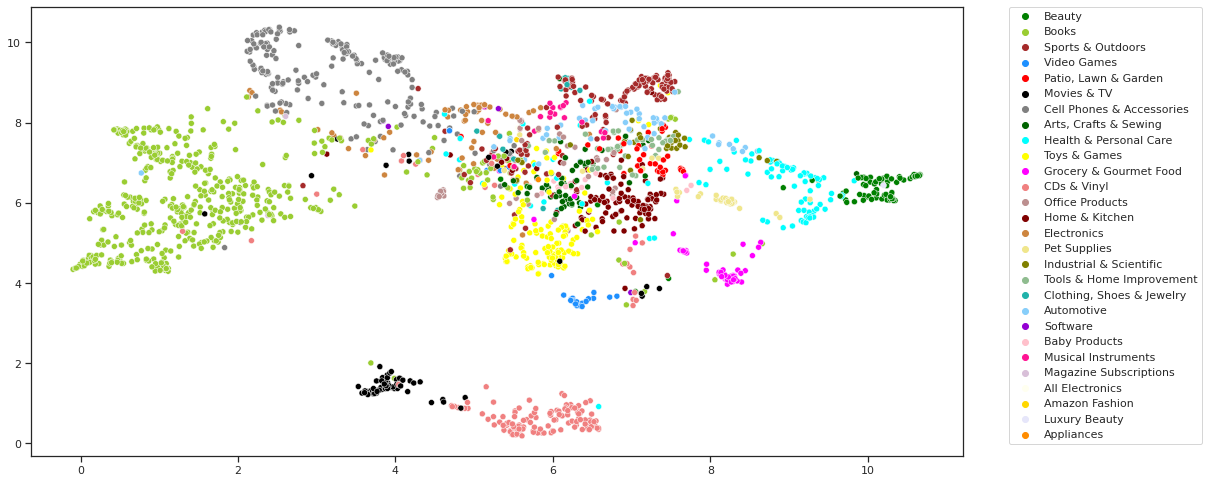
  • Generating Graph Embeddings Visualizations and Observations
(more…)

ArangoML Series: Multi-Model Collaboration

Estimated reading time: 9 minutes

Estimated reading time: 8 minutes

Multi-Model Machine Learning

This article looks at how a team collaborating on a real-world machine learning project benefits from using a multi-model database for capturing ML meta-data.

The specific points discussed in this article are how:

  • The graph data model is superior to relational for ML meta-data storage.
  • Storing ML experiment objects is natural with multi-model.
  • ArangoML promotes collaboration due to the flexibility of multi-model.
  • ArangoML provides ops logging and performance analysis.
(more…)

ArangoML Series: Intro to NetworkX Adapter

Estimated reading time: 4 minutes

Estimated reading time: 3 minutes

This post is the fifth in a series of posts introducing the ArangoML features and tools. This post introduces the NetworkX adapter, which makes it easy to analyze your graphs stored in ArangoDB with NetworkX.

In this post we:

  • Briefly introduce NetworkX
  • Explore the IMDB user rating dataset
  • Showcase the ArangoDB integration of NetworkX
  • Explore the centrality measures of the data using NetworkX
  • Store the experiment with arangopipe

This notebook is just a slice of the full-sized notebook available in the ArangoDB NetworkX adapter repository. It is summarized..

(more…)

Performance analysis with pyArango: Part III Measuring possible capacity with usage Scenarios

Estimated reading time: 14 minutes

So you measured and tuned your system like described in the Part I and Part II of these blog post series. Now you want to get some figures how many end users your system will be able to serve. Therefore you define “scenarios” which will be typical for what your users do. One such a user scenario could i.e. be:

(more…)

Performance analysis with pyArango: Part II Inspecting transactions

Estimated reading time: 3 minutes

Following the previous blog post on performance analysis with pyArango, where we had a look at graphing using statsd for simple queries, we will now dig deeper into inspecting transactions. At first, we split the initialization code and the test code.

(more…)

Performance analysis using pyArango Part I

Estimated reading time: 6 minutes

This is Part I of Performance analysis using pyArango blog series. Please refer here for: Part II (cluster) and Part III (measuring system capacity).

Usually, your application will persist of a set of queries on ArangoDB for one scenario (i.e. displaying your user’s account information etc.) When you want to make your application scale, you’d fire requests on it, and see how it behaves. Depending on internal processes execution times of these scenarios vary a bit.

We will take intervals of 10 seconds, and graph the values we will get there:

  • average – all times measured during the interval,..
(more…)

Contributors for Python API wanted for nosql project

Estimated reading time: 2 minutes

Note: We changed the name of the database in May 2012. AvocadoDB is now called ArangoDB.

Are you a Python expert and want to contribute to an open source project? We need your help writing an API for Python for a new nosql database!

AvocadoDB is a rather new open source project – a fancy nosql database with a couple of interesting features:

  • Schema-free schemata
  • Usable asapplication server
  • Consequent use of JavaScript
  • multi-threaded
  • Flexible data modeling (key value pairs, document store, graph database)
  • Free index choice
  • Configurable durability
  • Support for modern storage hardware like SSD..
(more…)
«
1
»