ArangoDB 3.12 Product Release Announcement! Read the blog for details. Read Blog

Vector-5

ArangoDB 3.12 – Performance for all Your Data Models

Estimated reading time: 9 minutes

Estimated reading time: 4 minutes

We are proud to announce the GA release of ArangoDB 3.12!

Congrats to the team and community for the latest ArangoDB release 3.12! ArangoDB 3.12 is focused on greatly improving performance and observability both for the core database and our search offering. In this blog post, we will go through some of the most important changes to ArangoDB and give you an idea of how this can be utilized in your products.

(more…)

The world is a graph: How Fix reimagines cloud security using a graph in ArangoDB

Estimated reading time: 5 minutes

‘Guest Blog’

Estimated reading time: 5 minutes

In 2015, John Lambers, a Corporate Vice President and Security Fellow at Microsoft wrote “Defenders think in lists. Attackers think in graphs. As long as this is true, attackers win.ˮ

The original problem in cloud security is visibility into my assets. If security engineers donʼt know what cloud services are running, they canʼt protect an environment. Unfortunately, first generation cloud security products were built with a list mindset, i.e. “rows and columnsˮ. They generate a list of assets and their configurations – but show no context of..

(more…)

Reintroducing the ArangoDB-RDF Adapter

Estimated reading time: 2 minutes

Estimated reading time: 1 minute

ArangoRDF allows you to export Graphs from ArangoDB into RDFLib, the standard library for working with Resource Description Framework (RDF) in Python, and vice-versa.

(more…)

Introducing ArangoDB’s Data Loader : Revolutionizing Your Data Migration Experience

Estimated reading time: 7 minutes

Estimated reading time: 7 minutes

At ArangoDB, our commitment to empowering companies, developers, and data enthusiasts with cutting edge tools and resources remains unwavering. Today, we’re thrilled to unveil our latest innovation, the Data Loader, a game-changing feature designed to simplify and streamline the migration of relational databases to ArangoGraph. Let’s dive into what makes Data Loader a must-have tool for your data migration needs.

(more…)

Integrate ArangoDB with PyTorch Geometric to Build Recommendation Systems

Estimated reading time: 1 minutes

Estimated reading time: 20 minutes

In this blog post, we will build a complete movie recommendation application using ArangoDB and PyTorch Geometric. We will tackle the challenge of building a movie recommendation application by transforming it into the task of link prediction. Our goal is to predict missing links between a user and the movies they have not watched yet.

Run this notebook yourself: https://colab.research.google.com/github/arangodb/interactive_tutorials/blob/master/notebooks/Integrate_ArangoDB_with_PyG.ipynb

(more…)

A Comprehensive Case-Study of GraphSage using PyTorchGeometric and Open-Graph-Benchmark

Estimated reading time: 1 minutes

Estimated reading time: 15 minute

This blog post provides a comprehensive study on the theoretical and practical understanding of GraphSage, this notebook will cover:

  • What is GraphSage
  • Neighbourhood Sampling
  • Getting Hands-on Experience with GraphSage and PyTorch Geometric Library
  • Open-Graph-Benchmark’s Amazon Product Recommendation Dataset
  • Creating and Saving a model
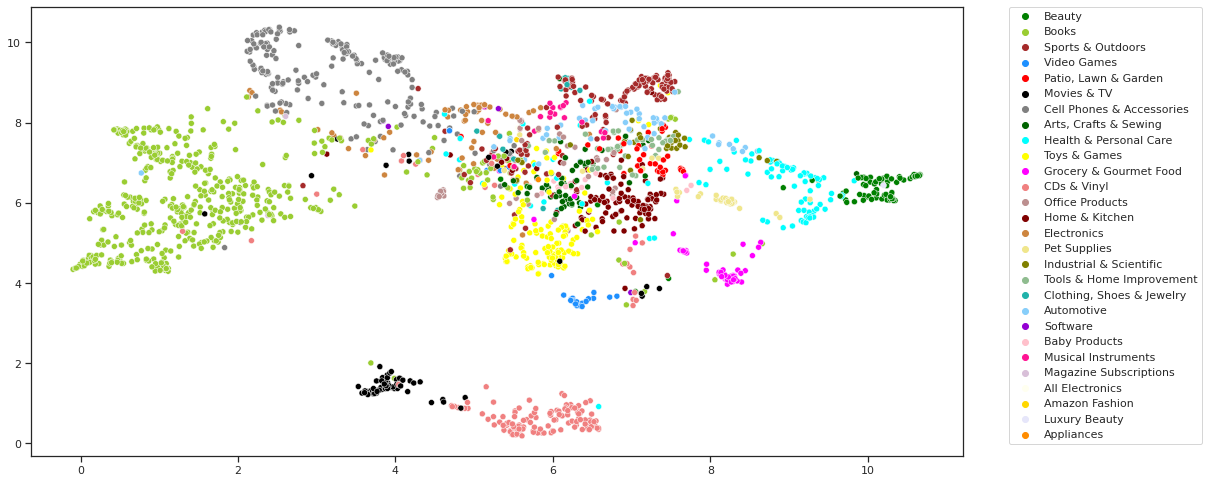
  • Generating Graph Embeddings Visualizations and Observations
(more…)

Community Notebook Challenge

Estimated reading time: 2 minutes

Calling all Community Members! 🥑

Today we are excited to announce our Community Notebook Challenge.

What is our Notebook Challenge you ask? Well, this blog post is going to catch you up to speed and get you excited to participate and have the chance to win the grand prize: a pair of custom Apple Airpod Pros.

Our Interactive Tutorials repository has a library of python notebooks available covering the full spectrum of ArangoDB features. Although we cover a lot of topics, something is missing… YOUR notebook! As announced in our July Newsletter on July 29th and running until October 31st, the ..

(more…)

ArangoML Series: Multi-Model Collaboration

Estimated reading time: 9 minutes

Estimated reading time: 8 minutes

Multi-Model Machine Learning

This article looks at how a team collaborating on a real-world machine learning project benefits from using a multi-model database for capturing ML meta-data.

The specific points discussed in this article are how:

  • The graph data model is superior to relational for ML meta-data storage.
  • Storing ML experiment objects is natural with multi-model.
  • ArangoML promotes collaboration due to the flexibility of multi-model.
  • ArangoML provides ops logging and performance analysis.
(more…)

ArangoML Series: Intro to NetworkX Adapter

Estimated reading time: 4 minutes

Estimated reading time: 3 minutes

This post is the fifth in a series of posts introducing the ArangoML features and tools. This post introduces the NetworkX adapter, which makes it easy to analyze your graphs stored in ArangoDB with NetworkX.

In this post we:

  • Briefly introduce NetworkX
  • Explore the IMDB user rating dataset
  • Showcase the ArangoDB integration of NetworkX
  • Explore the centrality measures of the data using NetworkX
  • Store the experiment with arangopipe

This notebook is just a slice of the full-sized notebook available in the ArangoDB NetworkX adapter repository. It is summarized..

(more…)

Neo4j Fabric: Scaling out is not only distributing data

Estimated reading time: 4 minutes

Estimated reading time: 3 minutes

Neo4j, Inc. is the well-known vendor of the Neo4j Graph Database, which solely supports the property graph model with graphs of previously limited size (single server, replicated).

In early 2020, Neo4j finally released its 4.0 version which promises “unlimited scalability” by the new feature Neo4j Fabric. While the marketing claim of “scalability” is true seen from a very simplistic perspective, developers and their teams should keep a few things in mind – most importantly: True horizontal scalability with graph data is not achieved by just allowing..

(more…)
«
1 2 3 4
»