
ArangoDB 3.12 Product Release Announcement! Read the blog for details. Read Blog

Vector-5

ArangoDB 3.12 – Performance for all Your Data Models

Estimated reading time: 9 minutes

Estimated reading time: 4 minutes

We are proud to announce the GA release of ArangoDB 3.12!

Congrats to the team and community for the latest ArangoDB release 3.12! ArangoDB 3.12 is focused on greatly improving performance and observability both for the core database and our search offering. In this blog post, we will go through some of the most important changes to ArangoDB and give you an idea of how this can be utilized in your products.
(more…)

Advanced Fraud Detection in Financial Services with ArangoDB and AQL

Estimated reading time: 3 minutes

Estimated reading time: 3 minutes

Advanced Fraud Detection: ArangoDB’s AQL vs. Traditional RDBMS

In the realm of financial services, where fraud detection is both critical and complex, the choice of database and query language can impact the efficiency and effectiveness of fraud detection systems. Let’s explore how ArangoDB – a multi-model graph database – is powered by AQL (ArangoDB Query Language) to handle multiple, real-world fraud detection scenarios in a much more seamless and powerful way compared to traditional Relational Database Management Systems (RDBMS).

(more…)

Who’s Who in Data Science

Estimated reading time: 10 minutes

Estimated reading time: 10 minutes

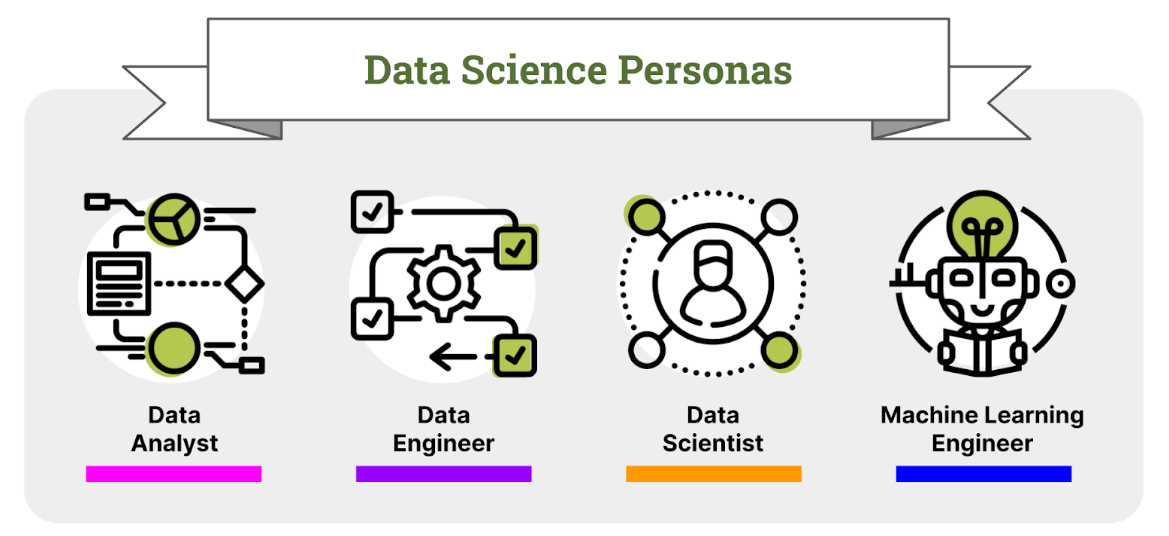
Multiple data science personas participate in the daily operations of data logistics and intelligent business applications. Management and employees need to understand the big picture of data science to maximize collaboration efforts for these operations. This article will highlight the specialized roles and skillsets needed for the different data science tasks and the best tools to empower data-driven teams. You will come away from this article with a better understanding of how to support your own data science teams, and it is valuable for both managers..

(more…)

Community Notebook Challenge

Estimated reading time: 2 minutes

Calling all Community Members! 🥑

Today we are excited to announce our Community Notebook Challenge.

What is our Notebook Challenge you ask? Well, this blog post is going to catch you up to speed and get you excited to participate and have the chance to win the grand prize: a pair of custom Apple Airpod Pros.

Our Interactive Tutorials repository has a library of python notebooks available covering the full spectrum of ArangoDB features. Although we cover a lot of topics, something is missing… YOUR notebook! As announced in our July Newsletter on July 29th and running until October 31st, the ..

(more…)

Sort-Limit Optimization in AQL

Estimated reading time: 4 minutes

Sometimes we want sorted output from a query and, for whatever reason, cannot use an index to do the sorting. In ArangoDB, we already cover this critical case with finely tuned query execution code. Sometimes though, we do not need to return all output, and follow our  SORT  clause with LIMIT . In ArangoDB 3.4 and earlier, we did not handle this case any differently from returning the full data, at least with respect to sorting – we would sort the full input, then apply the limit afterwards .

In many cases though, it is possible to maintain just a reduced set of data in memory,..

(more…)

Using the WebUI AQL Editor – Basics

Estimated reading time: 3 minutes

The ArangoDB query language (AQL) can be used to retrieve and modify data that is stored in ArangoDB. The AQL editor in the web interface is useful for running ad hoc AQL queries and trying things out.

The editor is split into three parts. The center section allows you to write your query and modify your query bind parameters. At the bottom you can either run the query or explain it, allowing to explain the query and inspect its execution plan. This can be used to check if the query uses indexes, and which. Here more information about optimizing a query.

(more…)

From Zero to Advanced Graph Query Knowledge with ArangoDB

Estimated reading time: 1 minutes

Thinking about your data as a highly connected set of information is a powerful way to gain insights, solve problems and bring products faster into the hands of your users.

Unlike other databases, relationships take the first priority in graph databases and with ArangoDBs multi-model approach for graphs, documents and key/value pairs you can even switch between models or combine them in a single query.

The graph concept is booming but still new to many. So we invested a few bazillion coffees and some night shifts to come up with a good plan for a Graph Course:

(more…)

Arangochair – a tool for listening to changes in ArangoDB

Estimated reading time: 2 minutes

The ArangoDB team gave me an opportunity to write a tutorial about arangochair. Arangochair is the first attempt to listen for changes in the database and execute actions like pushing a document to the client or execute an AQL query. Currently it is limited to single nodes.

This tutorial is loosely based on the example at baslr/arangochair-serversendevents-demo

arangochair is a Node.js module hosted on npm which make it fairly easy to install. Just runnpm install arangochair and its installed.

(more…)

Killing a long-running query

Estimated reading time: 1 minutes

Suppose there is an AQL query that’s executing in the server for a long time already and you want to get rid of it. What can be done to abort that query?

If a connection to the server can still be established, the easiest is to use the ArangoShell to fetch the list of currently executing AQL queries and send a kill command to the server for the correct query.

To start, we can fetch the list of all running queries and print their ids, query strings and runtimes. This is only inspection and does not abort any query:

var queries = require("org/arangodb/aql/queries"); queries.current();

Here’s..

(more…)

AQL optimizer improvements for 2.8

Estimated reading time: 4 minutes

With the 2.8 beta phase coming to an end it’s time to shed some light on the improvements in the 2.8 AQL optimizer. This blog post summarizes a few of them, focusing on the query optimizer. There’ll be a follow-up post that will explain dedicated new AQL features soon.

Array indexes

2.8 allows creating hash and skiplist indexes on attributes which are arrays. Creating such index works similar to creating a non-array index, with the exception that the name of the array attribute needs to be followed by a [*] in the index fields definition:

db._create("posts"); db.posts.ensureIndex({ type:..
(more…)
«
1 2 3 4
»